Insights
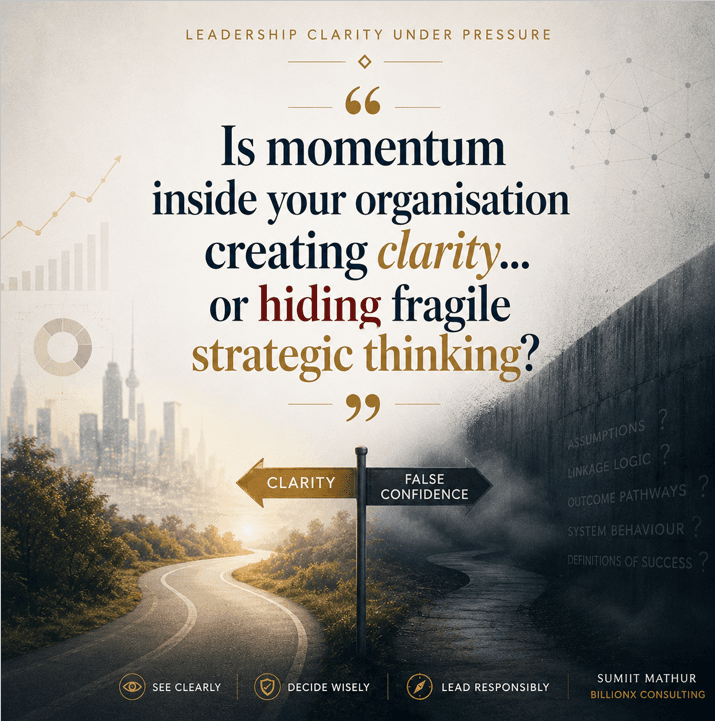
Early Momentum Can Hide Fragile Strategic Thinking Surprisingly Well
"Visible organisational confidence can often conceal how immature the underlying strategic thinking still is. The most expensive transformation problems begin during periods of high momentum and organisational confidence."
Some of the most difficult transformation environments I've seen did not begin with weak leadership, lack of effort, or poor intent. In many cases, the organisation was highly committed, the direction appeared aligned, and confidence became visible very early in the journey.
The goals often sounded reasonable. The expected outcomes appeared clear enough for mobilisation to accelerate, and movement itself started creating reassurance across the organisation.
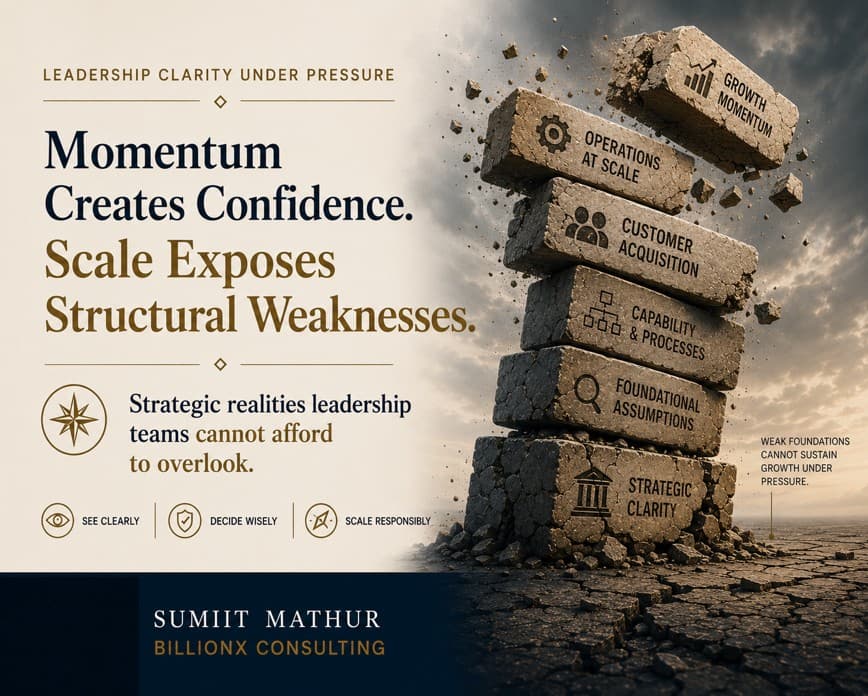
Almost invariably, regardless of sector or scale, organisational momentum started building long before deeper strategic understanding had fully matured underneath.
Visible organisational confidence can often conceal how immature the underlying strategic thinking still is.
Not because leaders are deliberately rushing, but because large organisations often operate under enormous pressure to reduce ambiguity quickly. Visible movement creates reassurance, while prolonged reflection can start feeling uncomfortable in transformation environments where expectations, visibility and urgency continue building simultaneously.
As momentum builds, organisations often become far less willing to pause and challenge the core assumptions underneath the direction - particularly once substantial time, effort and organisational energy have already been consumed, while major future commitments of funding, delivery effort and executive credibility remain tied to continuing the path ahead.
That is where the risk quietly starts compounding and some of the most expensive transformation problems begin during periods of high momentum and organisational confidence.
Because the environment can still appear highly functional during this period, the underlying fragility often goes largely unchallenged. Confidence strengthens externally while hidden instability continues compounding underneath.
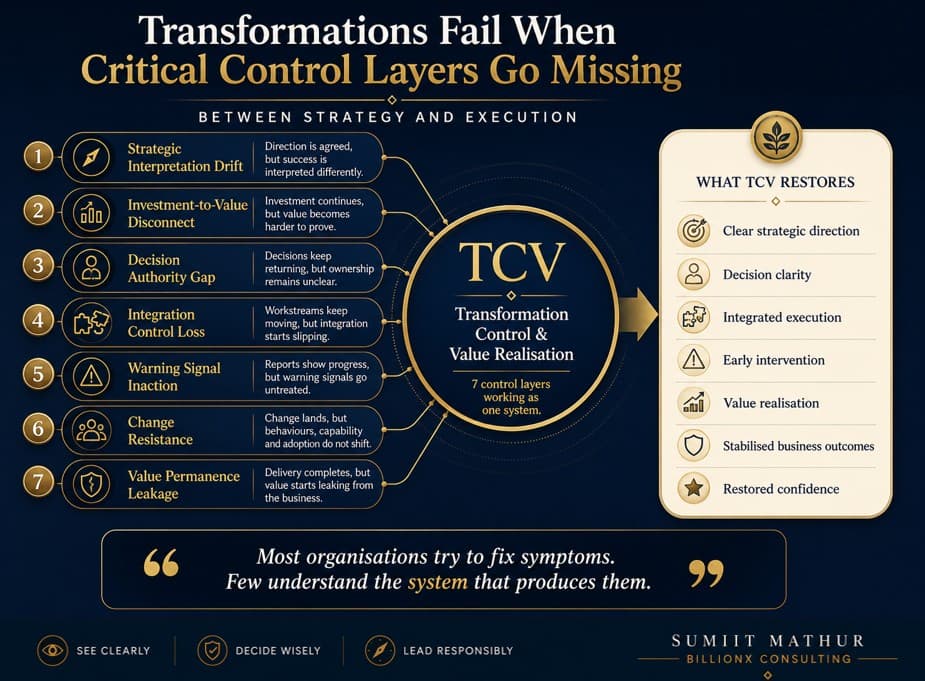
Over time, the cost often appears through shifting priorities, repeated recalibration, strategic fatigue and hidden friction that becomes increasingly expensive to reverse. And by that stage, even stronger governance, reporting and delivery discipline often cannot compensate for the underlying clarity that was missed earlier.
Is this already happening inside your organisation... but still not being openly discussed?
This article was originally published on LinkedIn on 19 May 2026.
Continue Reading
Found this useful?
Let's explore what this means for your organisation.
A focused 45-minute conversation — no slide decks, no pitch. Just candid, senior-level thinking about what you're navigating.
Start a Conversation